Three different products
In-cabin travel means the animal stays with you in a carrier under the seat in front, booked as an extra on your own ticket. Checked hold — often called excess baggage — means the animal flies in a pressurised, temperature-controlled compartment on your flight, checked in at the passenger terminal and linked to your booking. Manifest cargo is a freight service with its own air waybill, handled at a cargo terminal, and it does not require you to be on the aircraft at all. The rules, prices and contacts differ for each.
What actually decides it
Size comes first: an animal that cannot fit a carrier under the seat while standing and turning is not a cabin candidate, and the combined weight limit is typically around 8 kg. After that, destination law can override everything. Pets arriving in Great Britain, for example, cannot travel in the cabin and must come as checked baggage or cargo on an approved route, with limited exceptions for assistance dogs. Airline policy, aircraft type, breed restrictions and seasonal temperature embargoes narrow the field further, and a codeshare partner may apply different rules on the same itinerary.
How the hold works
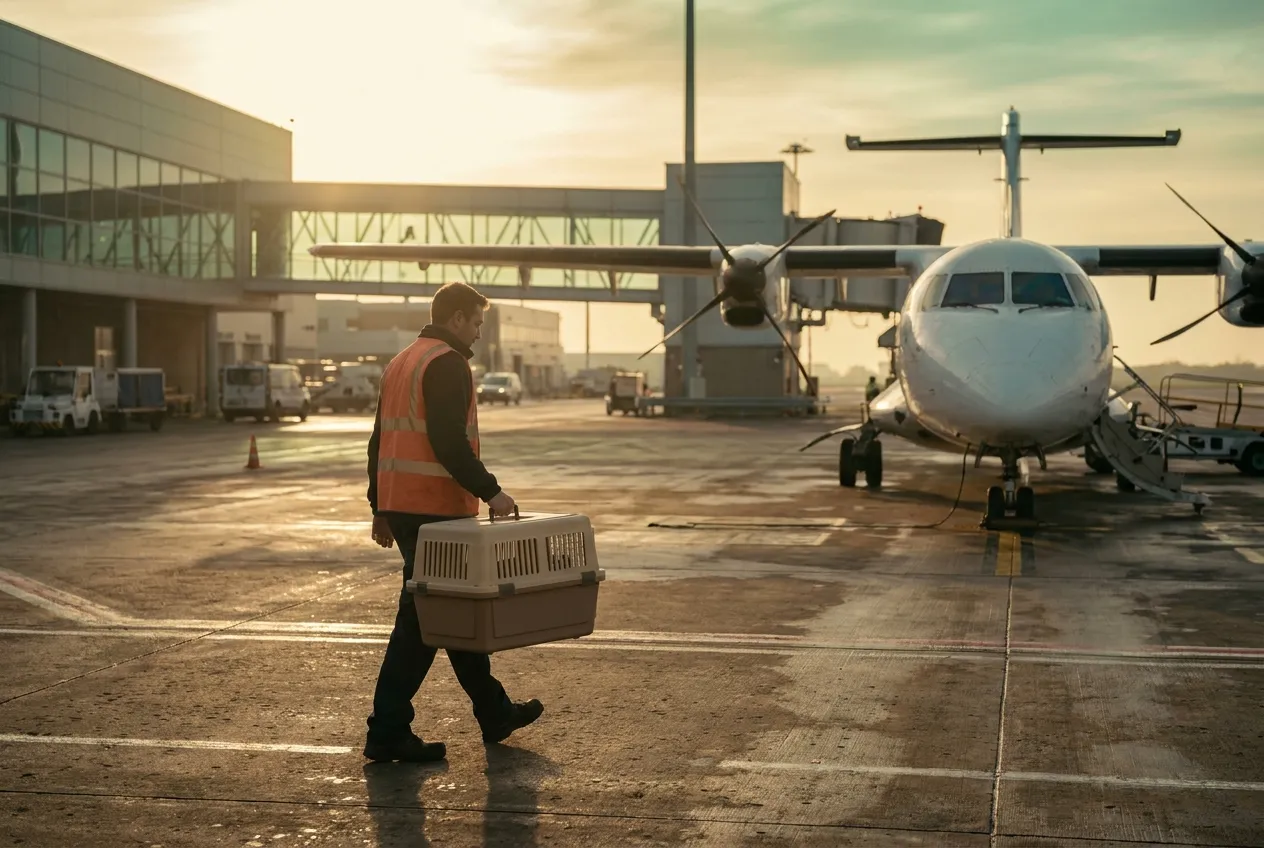
Animals travel in a dedicated compartment that is pressurised and heated to a similar standard as the cabin, though the temperature range is wider and lighting is dim. Crates are normally loaded last and unloaded first to shorten the time on the tarmac, which is the genuinely uncomfortable part of the journey. Many airlines apply ground-temperature embargoes at every airport on the routing, so a mild departure city does not help if the connection is in a heatwave. Direct flights remove a loading cycle and are worth paying for.
What cargo involves
Cargo bookings are made through the airline’s freight division or an agent, often weeks in advance because live-animal capacity per flight is limited. Drop-off is at a cargo terminal, typically four to six hours before departure and sometimes on the opposite side of the airport from departures. On arrival the animal is collected from an import shed after customs clearance, not from baggage reclaim, and clearance may require a broker and take several hours. Terminal opening hours matter: a late-evening arrival can mean the animal waits until the next working morning.
Making the call
Where the cabin is permitted and the animal genuinely fits, it is normally the cheapest option and the least disruptive. Checked hold suits medium and large animals travelling with their owner on a direct route. Cargo is the answer when the airline will not carry pets as baggage, when you are not flying with the animal, or when the destination requires it. Do not force a borderline case into the cabin — being turned away at check-in with a non-refundable ticket is a worse outcome than booking the hold from the start.