The size ceiling
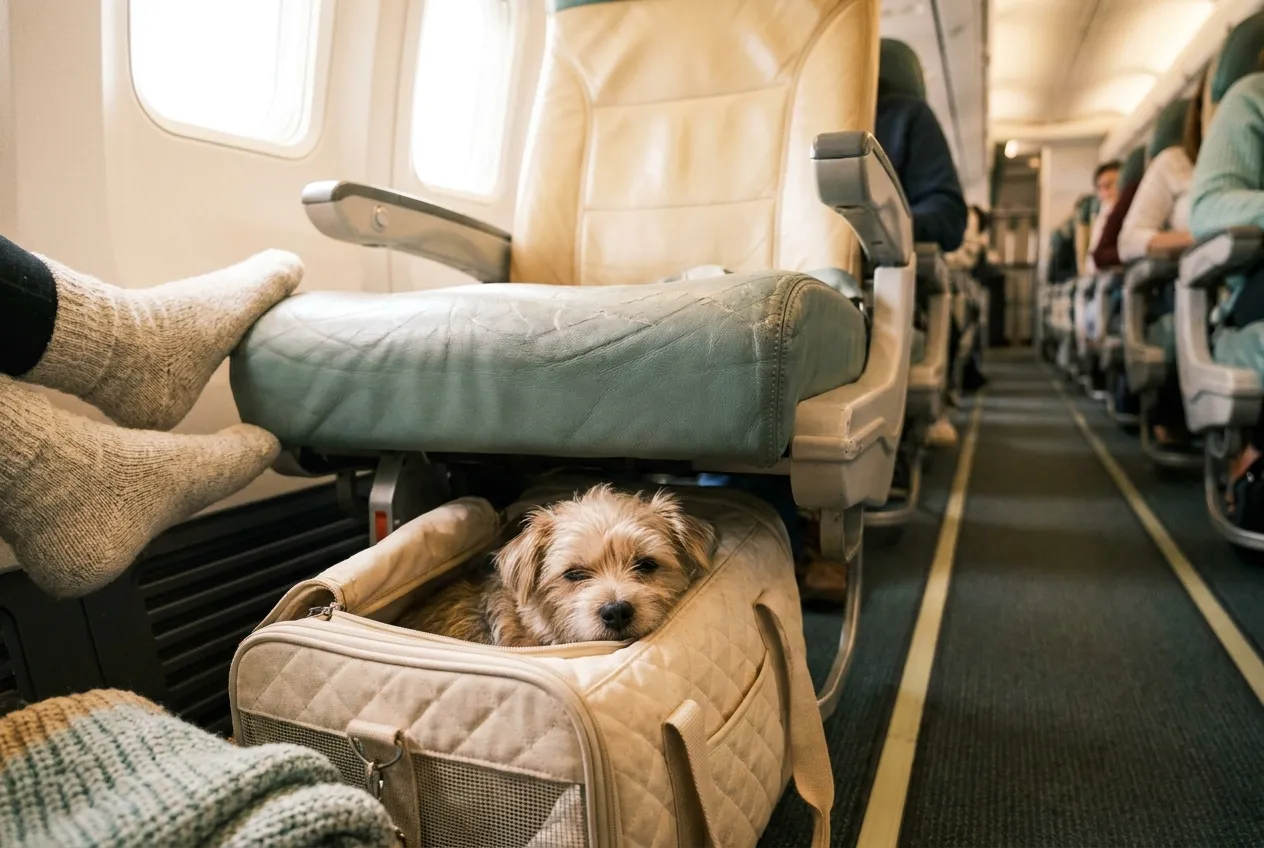
In-cabin travel is for small dogs and cats that fit in a ventilated carrier under the seat in front of you — typically up to 8–9 kg combined with the carrier. Above that, they travel in the hold or as cargo.
Long-haul is different
Several carriers allow in-cabin pets on short and medium routes but not on long-haul international flights. Always confirm the specific flight, not just the airline’s general policy.
Book the pet before the seat
Airlines cap the number of pets per cabin. Reserve your pet’s spot as soon as your route is set — it is a scarcer resource than your own seat.
The carrier has to fit twice
Under-seat space differs by aircraft and even by row, and published maximums cluster around 43 x 30 x 20 cm for soft-sided bags — but the figure is set by each airline, not by a common standard. The same carrier must also let your dog stand up, turn around and lie down naturally, which is the test staff apply at the gate. Soft sides help it compress into the space; a rigid box often will not. Measure the bag yourself rather than trusting the label, and check the limit for every flight in the itinerary.
Airport day
Cabin pets normally rule out online check-in, so allow extra time at the desk where documents are inspected and the fee is taken. Expect to carry your dog through security while the empty bag goes through the scanner; a harness and lead prevent the worst-case moment. The dog must stay inside the carrier from boarding to arrival, under the seat rather than on your lap. Sedation is widely advised against by veterinary bodies because it affects breathing and temperature control at altitude — ask your vet about calming alternatives instead.