Cabin is usually available
Most adult cats fall comfortably under the combined pet-and-carrier weight limits airlines apply to in-cabin travel, which typically sit around 8 kg but vary by carrier. That makes the cabin the default for cats in a way it is not for medium and large dogs. The constraint is rarely the animal and usually the aircraft: the number of pets per cabin is capped, and some long-haul routes do not permit them at all. A few destinations, including the United Kingdom, do not allow pets to arrive in the cabin regardless of size.
The documents are identical
Cats face the same import framework as dogs. An ISO microchip, a rabies vaccination given after the chip, a waiting period of at least 21 days for the EU, and a health certificate within the destination’s window all apply. Cats are covered by the EU Pet Passport scheme alongside dogs and ferrets. The rabies product used must be licensed for cats, which is worth confirming with your vet, and the tapeworm treatment required for Great Britain, Ireland, Finland, Malta and Norway applies to dogs only.
Choosing the carrier
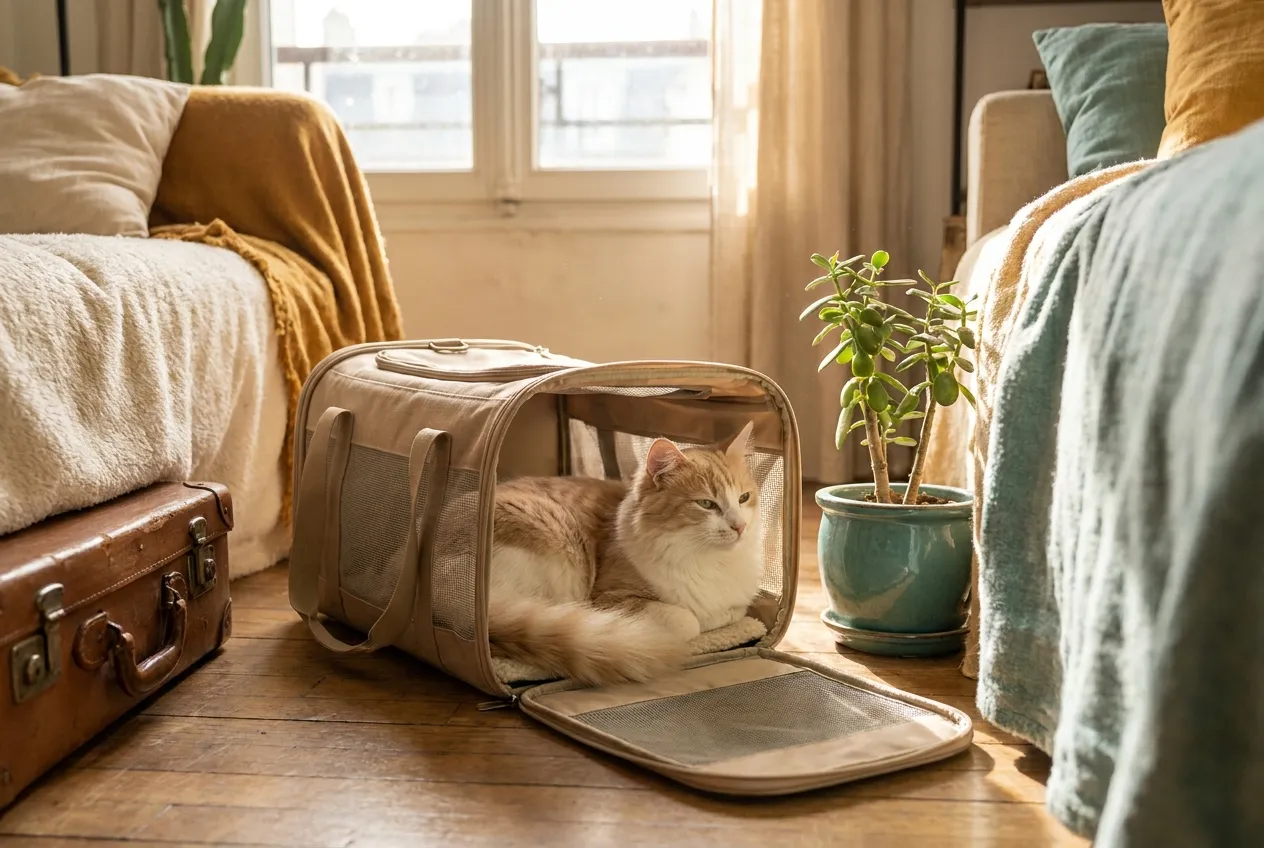
A soft-sided bag that opens from the top is easier to lift a reluctant cat into than one with only a front door. Look for a rigid, waterproof base, a removable absorbent pad, mesh on at least two sides and zips that can be secured — cats are practised at working a zip open from inside, and a small carabiner or cable tie through the pulls solves it. The bag still has to fit under the seat while letting the cat stand and turn. Line it with something that already smells of home.
Security screening catches people out
At most airports the carrier goes through the X-ray machine empty, which means holding your cat while you walk through the detector. This is where cats escape. Fit a well-adjusted harness with a short lead before you leave home, keep the lead attached to your wrist, and ask whether a private screening room is available — many airports will provide one on request. Take the cat out and put it back inside the carrier only when the bag is closed and on the floor, never on a moving belt or an open counter.
Keeping a cat calm
Introduce the carrier weeks ahead as ordinary furniture, with the door off and treats inside, so it stops signalling a vet visit. A synthetic feline pheromone spray applied to the bedding around 15 to 30 minutes before departure gives it time to dry. Withhold a large meal for a few hours before the flight but leave water available until you leave for the airport. Sedatives are generally discouraged for air travel; if your cat is severely stressed, discuss anti-anxiety options and a trial dose at home well before the trip.